
Our work
Our programs
We open each program only when it's ready to serve families well. None is open yet. Sign up for updates to hear when each one launches.
Specialist connections
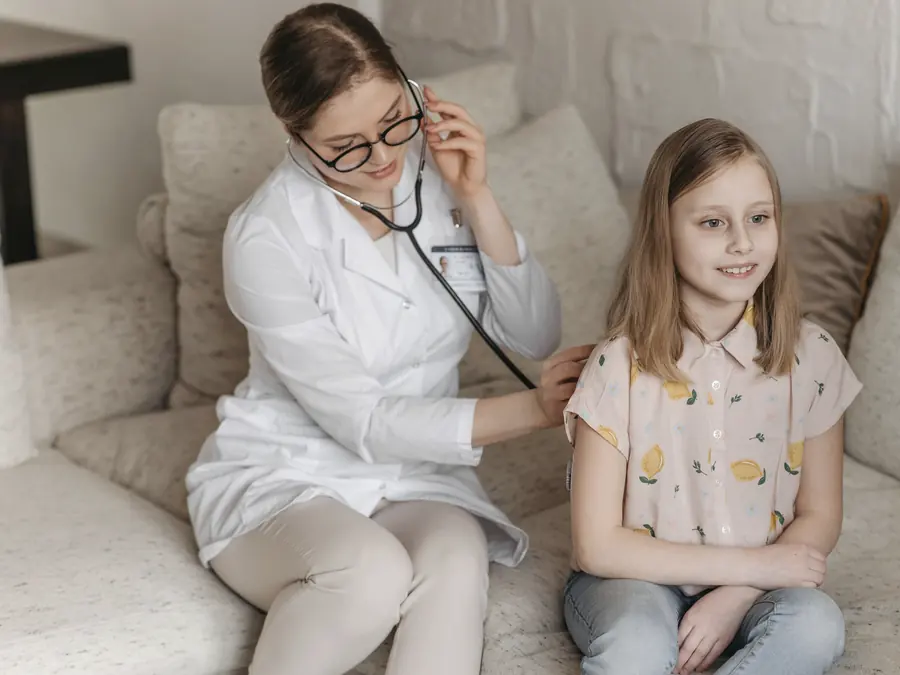
We work to connect families with specialists who understand their child's condition, wherever in the world they are.
Sometimes that is a clinic here in Texas, sometimes a researcher on the other side of the world, and sometimes the honest answer is that no one is studying that condition yet. We will tell you either way, and we will keep looking.
We can also help families prepare for genetic testing and make sense of the results.
We connect families with care. We don't provide medical care ourselves.
Need help finding a specialist today? Start with the groups on our resources page.
Why it matters. In a review of 37 studies of more than 20,000 children with suspected genetic conditions, genome or exome sequencing found a genetic cause, or a likely cause, in about 4 in 10 of the children who had that testing. Source: Clark et al., npj Genomic Medicine, 2018

Practical relief
Our organization is designed to assist with the bills that pile up around a diagnosis: a mortgage payment, a utility bill, co-pays, transportation, therapy costs, and respite so parents can rest.
Help will follow written, fair criteria and be paid directly to the lender, utility, or provider.
Help paying for genetic testing is available now through these programs.
Our focus is children and their families, but adults with genetic conditions are not excluded from assistance.
Why it matters. In a national survey covering 2016 and 2017, about 1 in 7 families that had a child with special health care needs and a caregiver who had been working had a family member stop working or cut back hours because of the child's health. The lost earnings were estimated at about $18,000 a year for each of those families. Source: Foster et al., Pediatrics, 2021
Research and university grants
We're working to close the gaps in genetic complexity by funding universities and researchers around the country, from understanding rare genetic conditions in children to finding new ways to diagnose and treat them.
Rare conditions are hard to study because each one affects so few children, so the work often goes unfunded and the families waiting on it stay invisible.
Our grants will go where that gap is widest: earlier and more accurate diagnosis, the conditions nobody has taken up yet, and the studies that move a child from an unexplained illness to a name and a plan.
We will publish what we fund and what comes of it.
Why it matters. When families band together, their efforts can sometimes shrink the path to finding the genetic basis of a rare condition from decades to a year or two. Source: National Human Genome Research Institute

Awareness
Educating the public about rare genetic conditions in children, and raising awareness of what medical parenting truly demands.
Most people have never heard of the condition a family is living with, and that silence shows up everywhere: in classrooms, in waiting rooms, and in the help a family is or is not offered.
We work to change that by explaining these conditions in plain language, by sharing what families tell us the road actually looks like, and by speaking up where policy touches children with genetic conditions.
No parent should have to explain their child's diagnosis from scratch every time they walk into a room.
Why it matters. In an analysis of the Orphanet rare disease database, about 7 in 10 of the rare diseases with a known age of onset (69.9 percent) begin only in childhood, not in adulthood. Source: Nguengang Wakap et al., European Journal of Human Genetics, 2020

The Lone Star Genome Act
A voluntary Texas pilot to find treatable genetic conditions at birth, with strong privacy protections for every family.
How we'll work
Build on what already works
Texas already has strong medical centers and national organizations helping families. We work alongside them and focus on the gaps they leave.
Point families to proven programs first, like the organizations on our resources page.
Focus our own programs on gaps: help beyond the big cities, support for the whole family, and costs no one else covers.
Share information only with a family's permission.
Keep data in the United States and follow the Texas Genomic Act.
Publish what we fund and what we learn.